

The aroma of freshly brewed coffee is a universally cherished sensory experience, a daily ritual for millions. As our lives become increasingly fast-paced, the convenience of instant coffee, particularly organic varieties, has surged in popularity.
But amidst this rise, a persistent question often percolates in the minds of health-conscious consumers: does organic instant coffee contain acrylamide? This concern isn’t unwarranted; acrylamide, a chemical compound that can form in certain starchy foods during high-temperature cooking, has been a subject of considerable scientific scrutiny.
In this comprehensive article, we will delve into the intricacies of acrylamide formation in organic instant coffee, explore the science, clarify common misconceptions, and provide you with a definitive understanding based on the latest available information in 2025.
The journey from a raw coffee bean to a soluble instant coffee granule involves several steps, each potentially influencing the final chemical composition, including the presence of acrylamide. For those dedicated to maintaining an organic lifestyle, the “organic” label adds another layer of expectation regarding purity and natural processing.
Our aim here is to equip you with the knowledge to make informed choices about your daily brew, whether it’s a quick cup before work or a relaxing afternoon treat.
Key Takeaways
- Acrylamide is Present in All Coffee: Acrylamide is a natural byproduct of the Maillard reaction, which occurs during the high-temperature roasting of coffee beans, irrespective of whether the coffee is organic, conventional, ground, or instant.
- Instant Coffee May Have Higher Levels: Due to its manufacturing process, which often involves higher temperatures and specialized drying techniques, instant coffee generally tends to have slightly higher levels of acrylamide compared to traditionally brewed regular coffee.
- Organic Status Doesn’t Prevent Formation: The “organic” certification primarily relates to agricultural practices (no synthetic pesticides, fertilizers, etc.) and does not prevent the natural chemical reactions, like the Maillard reaction, that form acrylamide during roasting. Therefore, does organic instant coffee contain acrylamide? Yes, it does.
- Levels are Generally Low and Monitored: While present, the acrylamide levels in coffee, including organic instant coffee, are generally considered low and are within regulatory guidelines established by health authorities worldwide. The dietary exposure from coffee alone is typically not a major health concern for most individuals.
- Mitigation Strategies Exist: Consumers can take steps to potentially reduce acrylamide intake from coffee, such as opting for darker roasts (which can have lower acrylamide per serving volume due to longer roasting breaking down precursors), or enjoying a balanced diet rich in fruits and vegetables.
Understanding Acrylamide: What It Is and Why It Matters
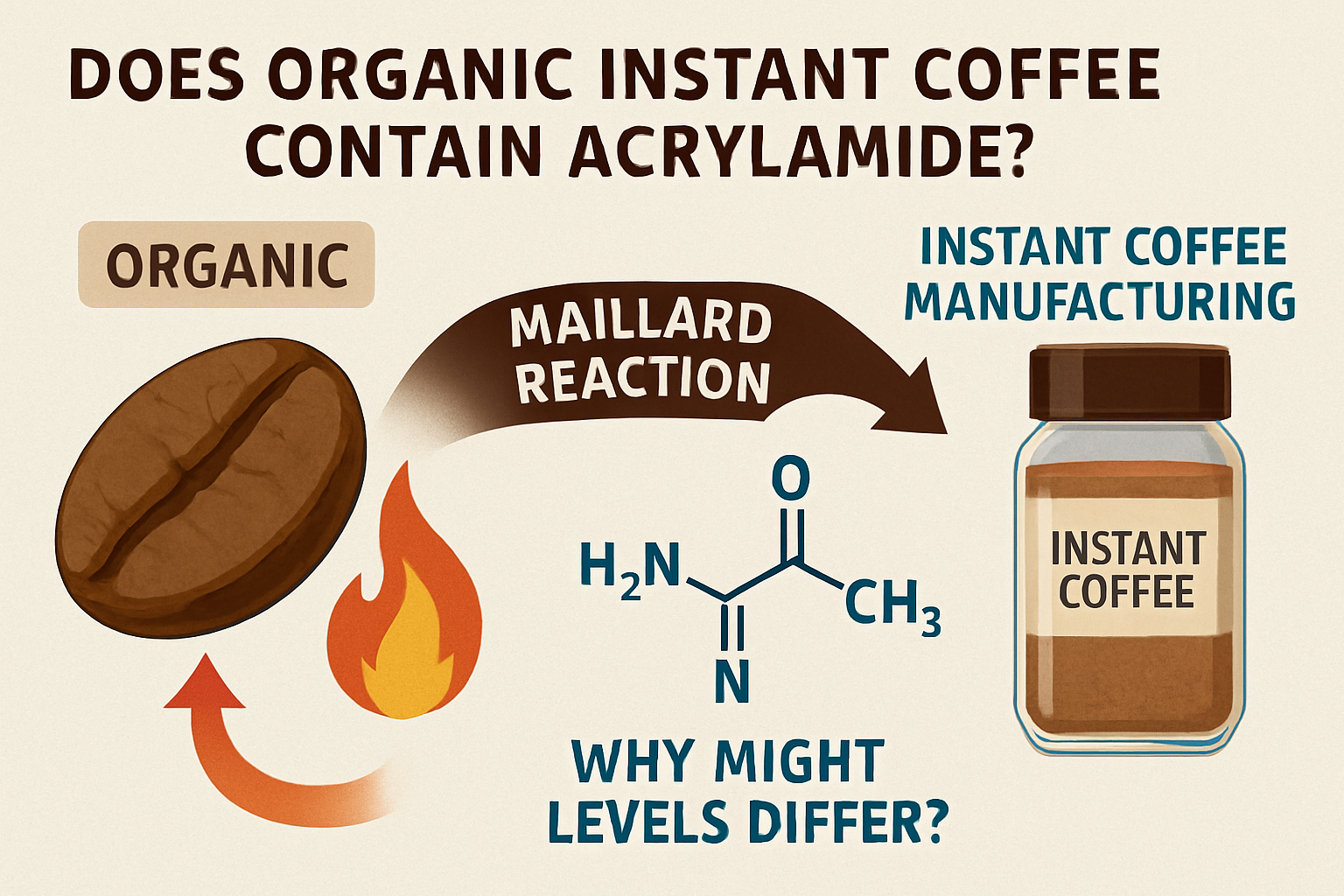
Acrylamide is a chemical compound that gained significant public attention in 2002 when Swedish scientists discovered its presence in a wide range of commonly consumed baked, roasted, and fried foods [1]. Chemically, it’s an organic compound with the formula CH2=CH-CO-NH2. It’s often formed through a chemical reaction between reducing sugars (like glucose and fructose) and asparagine, a free amino acid, during high-temperature processing – specifically above 120°C (248°F). This reaction is known as the Maillard reaction, which is also responsible for the desirable browning, flavor, and aroma in many foods, including the rich, complex profile we love in coffee.
The Maillard Reaction: A Culinary Marvel with a Chemical Twist
Imagine walking into a bakery, and that irresistible smell of fresh bread hits you, or the rich, inviting aroma of sizzling steak on a grill. That, in essence, is the magic of the Maillard reaction at play. It’s a complex series of chemical reactions between amino acids and reducing sugars that occurs when food is heated. Beyond simply browning food, it creates thousands of new flavor and aroma compounds.
In the context of coffee, the Maillard reaction is critical. Without it, coffee beans wouldn’t transform from their green, grassy state into the dark, aromatic treasures we know. It develops the characteristic flavor, color, and fragrance. However, it’s this very reaction, under specific conditions, that facilitates the formation of acrylamide. The precursor amino acid, asparagine, is naturally present in green coffee beans, as are various reducing sugars. When these beans are roasted at high temperatures, typically between 200°C and 250°C (392°F and 482°F), acrylamide can form.
Why Acrylamide Matters to Health-Conscious Consumers
The concern surrounding acrylamide stems from its classification as a “probable human carcinogen” by the International Agency for Research on Cancer (IARC), based on studies in laboratory animals [2]. In these animal studies, high doses of acrylamide were linked to an increased risk of various types of cancer.
For humans, the evidence is less clear. Epidemiological studies (studies on human populations) have generally not found a consistent link between dietary acrylamide intake and an increased risk of cancer at typical exposure levels [3]. However, regulatory bodies worldwide, such as the U.S. Food and Drug Administration (FDA) and the European Food Safety Authority (EFSA), acknowledge the potential risk and advise consumers to reduce their intake of acrylamide where possible.
It’s important to distinguish between the extremely high doses used in animal studies and the much lower levels found in human diets. The goal isn’t necessarily to eliminate acrylamide entirely, which would be virtually impossible given its widespread presence in cooked foods, but rather to understand its sources and potentially minimize exposure.
Does Organic Instant Coffee Contain Acrylamide? The Science Behind It
The central question, does organic instant coffee contain acrylamide, requires a closer look at the coffee manufacturing process, particularly the differences between organic and conventional, and instant versus regular ground coffee.
Acrylamide Formation in Coffee Roasting
All coffee beans, regardless of their cultivation method, contain asparagine and reducing sugars. The roasting process is the primary stage where acrylamide forms. The degree of roasting plays a significant role:
- Light Roasts: Often have higher levels of acrylamide per gram of roasted bean. This is because the acrylamide forms early in the roasting process, and longer roasting times can actually begin to break down the acrylamide.
- Dark Roasts: Can have lower levels of acrylamide per gram because the longer roasting time allows some of the formed acrylamide to degrade. However, consumers often use more coffee grounds for a dark roast to achieve desired strength, which might balance out the per-gram reduction.
The precise temperature, duration, and roasting profile are all factors that influence the final acrylamide content. Think of it like baking cookies: a slightly underbaked cookie might have different chemical compounds than a well-done one, even if they started with the same ingredients.
The Organic Factor: Does It Make a Difference?
When we talk about “organic” coffee, we’re primarily referring to the agricultural practices used to grow the coffee beans. Organic certification ensures:
- No Synthetic Pesticides or Herbicides: The coffee plants are grown without man-made chemicals.
- No Synthetic Fertilizers: Natural composts and other organic matter are used to enrich the soil.
- Sustainable Farming Practices: Focus on biodiversity, soil health, and ecological balance.
- No Genetically Modified Organisms (GMOs): Organic products are free from GMOs.
These practices are crucial for environmental health and can impact the presence of pesticide residues in the final product. However, the organic label fundamentally addresses how the plant is grown, not how the bean is roasted or processed.
“Being organic does not inherently alter the chemical precursors (asparagine and sugars) within the coffee bean, nor does it change the laws of chemistry that govern the Maillard reaction during roasting,” explains Dr. Lena Karlsson, a food chemist specializing in natural product chemistry. “Therefore, while organic coffee offers environmental benefits and ensures a cleaner bean from the start, it will still form acrylamide during the high-temperature roasting process, just like conventional coffee.”
So, to definitively answer does organic instant coffee contain acrylamide based on the organic certification alone, the answer is yes, because the organic label doesn’t prevent the natural formation during heat treatment.
Instant Coffee vs. Regular Coffee: A Processing Perspective
Here’s where the processing method truly comes into play when considering acrylamide levels.
Regular Coffee (Ground or Whole Bean):
After roasting, the beans are ground. When brewed, hot water extracts the soluble compounds. Acrylamide levels in a brewed cup of regular coffee are influenced by the roast level and brewing method (e.g., drip, French press, espresso). You can explore various methods in our guide to 18 Ways to Make Coffee.
Instant Coffee:
Instant coffee undergoes additional processing steps after roasting and brewing, designed to dehydrate the coffee into soluble granules or powder. These steps typically involve:
- Roasting: Similar to regular coffee.
- Grinding: Roasted beans are ground.
- Extraction: The ground coffee is brewed, often in large industrial extractors using hot water. This creates a highly concentrated coffee extract.
- Drying: This is the critical stage for instant coffee’s distinct characteristics and also its potential for acrylamide differences. Two main methods are used:
- Spray Drying: The coffee extract is sprayed into a stream of hot air (up to 250°C / 482°F) which rapidly evaporates the water, leaving fine powder.
- Freeze Drying: The coffee extract is frozen and then placed in a vacuum chamber, where the ice sublimates (turns directly into vapor) without melting. This method is generally considered to preserve more flavor but can also involve varying temperatures.
Because the drying processes for instant coffee, particularly spray drying, often involve exposure to high temperatures, and because the coffee is in a more concentrated form during these stages, instant coffee generally tends to have slightly higher levels of acrylamide compared to a cup of traditionally brewed coffee made from ground beans [4]. A study published in the Journal of Agricultural and Food Chemistry observed that instant coffee often had “two to three times higher” levels of acrylamide compared to brewed coffee [5].
Therefore, when asking does organic instant coffee contain acrylamide, the answer remains affirmative, and the “instant” aspect might contribute to slightly higher levels than its organic ground coffee counterpart. It’s a combination of the Maillard reaction during roasting and the subsequent high-temperature drying stages unique to instant coffee production.
Current Regulations and Safety Standards in 2026
The presence of acrylamide in food has led to extensive research and the establishment of guidelines by regulatory bodies around the world. As of 2025, these guidelines continue to evolve, focusing on minimizing dietary exposure without banning widely consumed foods.
International and National Guidelines
- European Union (EU): The EU has set benchmark levels for acrylamide in various food categories, including coffee. While these are not strict legal limits, they serve as indicators for food manufacturers to aim for reduction. For roasted coffee, the benchmark is 400 µg/kg, and for instant coffee, it is 850 µg/kg [6]. These levels are regularly reviewed.
- United States (FDA): The FDA has issued guidance to the food industry on how to reduce acrylamide levels in food products. They emphasize a “toolbox” approach, encouraging manufacturers to explore different processing adjustments. While the FDA has not set maximum allowable limits, they continue to monitor acrylamide levels in various foods and provide consumer information.
- World Health Organization (WHO) / Joint FAO/WHO Expert Committee on Food Additives (JECFA): JECFA has assessed acrylamide multiple times and concluded that it is a “human health concern.” They encourage continued efforts to reduce acrylamide in food and ongoing research to better understand its human health effects.
These regulations and guidelines highlight a shared global understanding: acrylamide is a concern that should be managed, but the levels found in typical dietary intake are generally considered low enough that the benefits of consuming certain foods, like coffee, often outweigh the perceived risk for most individuals.
Monitoring and Manufacturer Efforts
Food manufacturers, including those producing organic instant coffee, are acutely aware of the acrylamide issue. Many companies have invested significantly in research and development to optimize their processing methods to reduce acrylamide formation without compromising taste or quality. This includes:
- Optimized Roasting Profiles: Adjusting temperature and duration to minimize acrylamide while achieving desired flavor.
- Ingredient Selection: Researching coffee bean varieties with lower asparagine content.
- Post-Roasting Treatments: Exploring various techniques to reduce acrylamide after roasting, though this is more challenging.
- Improved Drying Methods: For instant coffee, manufacturers are refining spray-drying and freeze-drying techniques to reduce heat exposure.
Consumers can often find information about these efforts on manufacturers’ websites, particularly from brands that prioritize transparency and health. When choosing your next organic instant coffee, considering brands that actively address acrylamide can be a good step.
Navigating Your Coffee Choices: Mitigation Strategies
Given that does organic instant coffee contain acrylamide has been answered with a qualified “yes,” and knowing that regulations are in place, what can a health-conscious coffee lover do? The key is informed decision-making and a balanced approach.
Reducing Acrylamide Exposure from Coffee
While it’s nearly impossible to eliminate acrylamide entirely from coffee without sacrificing its characteristic flavor, there are several strategies that may help reduce your exposure:
- Consider Roast Level: As mentioned, darker roasts per gram can sometimes have lower acrylamide levels because longer roasting times allow for some degradation. However, brewing strength also matters. A medium roast might be a good compromise for flavor and acrylamide balance. Many individuals enjoy exploring different roasts; for more on crafting the perfect cup, check out our guide on Brewing Bliss: Your Ultimate Guide to Coffee Rituals for Beginners.
- Brewing Method: While not a primary factor for acrylamide, different brewing methods can influence the extraction of various compounds. For general information on preparing your coffee, refer to How to Brew Coffee.
- Choose Reputable Brands: Brands that are transparent about their sourcing and processing, and that actively test their products for contaminants, are often a good choice. Look for brands that mention their efforts to reduce acrylamide.
- Explore Decaffeinated Options: Some studies suggest that decaffeinated coffee may have slightly lower acrylamide levels than regular coffee, though this is not a universal rule and depends on the decaffeination process [7].
- Don’t Over-Roast at Home: If you roast your own beans, avoid excessive roasting. While this is less common for instant coffee, it’s a factor for those using green beans.
The Broader Dietary Context
It’s crucial to remember that acrylamide is found in a variety of foods, not just coffee. Potatoes cooked at high temperatures (fries, chips), cereals, biscuits, and some bread products are also significant sources. Focusing solely on coffee might miss the bigger picture.
“When considering dietary risks, it’s always about the overall pattern, not just one food item,” advises nutritionist Emily Chen. “A balanced diet rich in fruits, vegetables, and whole grains, combined with moderation in highly processed foods, is the most effective strategy for reducing exposure to any potential dietary concerns, including acrylamide. The health benefits of coffee, such as its antioxidant content, can also be part of that balance.”
For many, the benefits of coffee, including its antioxidant properties, ability to boost energy, and potential links to reduced risk of certain diseases, outweigh the concerns about low levels of acrylamide. Exploring the various aspects of coffee’s benefits can be found at Everything That Coffee Has to Offer.
Personal Story: My Journey with Organic Instant Coffee
As a long-time coffee enthusiast, the question “does organic instant coffee contain acrylamide” was one I personally grappled with. For years, my morning ritual involved grinding fresh organic beans and savoring the slow drip. But life, as it often does, sped up. With a demanding schedule and frequent travel, organic instant coffee became a convenient, almost indispensable, part of my routine.
I remember my initial apprehension. I had heard whispers about acrylamide and coffee, and the “instant” aspect felt inherently less “natural” than whole beans. I delved into research, much like what you’re reading now. I learned about the Maillard reaction, the science behind organic certification, and the specific processing of instant coffee.
What I found was reassuring. While it’s true that organic instant coffee does contain acrylamide, the levels are generally low. My focus shifted from trying to avoid it entirely (which is impossible) to understanding it and making balanced choices. I started buying from brands that were transparent about their sourcing and processing, and I made sure my diet elsewhere was rich in diverse, whole foods.
Now, my organic instant coffee is a guilt-free pleasure. It’s the quick, comforting warmth that fuels my early mornings or a convenient pick-me-up during a busy workday. The key was knowledge – understanding that “organic” speaks to cultivation, not chemical reactions, and that “instant” just means a different drying method. It allowed me to enjoy my coffee without unnecessary anxiety, appreciating it for the energy and taste it provides, knowing I’m making informed choices. It’s truly a testament to how information empowers better choices in our daily lives.
The Future of Acrylamide in Coffee in 2025 and Beyond
Research into acrylamide continues actively. Scientists are constantly exploring new methods to minimize its formation in food products, and our understanding of its effects on human health is always evolving.
Ongoing Research and Innovation
- Agricultural Practices: Research is being conducted on coffee varieties that naturally have lower levels of asparagine, the precursor amino acid. Adjustments to fertilization practices and harvesting times could also play a role.
- Processing Technologies: Innovations in roasting technology, such as vacuum roasting or specific temperature profiles, are being explored to reduce acrylamide formation. For instant coffee, advancements in drying techniques that use lower temperatures or shorter exposure times are areas of active development.
- Analytical Methods: Improved analytical methods allow for more precise measurement of acrylamide in food, helping manufacturers and regulators monitor levels more effectively.
Consumer Awareness and Industry Responsibility
As consumers become more health-conscious, the demand for transparent and safe food products will continue to grow. This puts pressure on the coffee industry, including organic instant coffee producers, to:
- Innovate: Invest in research and development to find practical solutions for acrylamide reduction.
- Communicate: Clearly inform consumers about their efforts and the science behind their products.
- Comply: Adhere to current and future regulatory guidelines.
In 2025, the conversation around acrylamide is much more nuanced than it was two decades ago. It’s no longer just about identifying its presence, but about understanding its formation, mitigating its levels, and placing it within the broader context of a healthy diet.
Conclusion
The question, does organic instant coffee contain acrylamide, is unequivocally answered: yes, it does, just like all roasted coffee. Acrylamide is a natural byproduct of the Maillard reaction, a complex chemical process responsible for coffee’s beloved flavors and aromas, occurring during high-temperature roasting. The “organic” certification pertains to the cultivation methods and does not prevent this natural chemical formation. Furthermore, due to the high-temperature drying stages in its production, instant coffee can sometimes contain slightly higher levels of acrylamide compared to traditionally brewed coffee.
However, it is crucial to place this information in perspective. Regulatory bodies worldwide acknowledge the presence of acrylamide but generally consider the levels in coffee, including organic instant coffee, to be low and within acceptable dietary exposure limits for most individuals. The scientific consensus, as of 2025, leans towards the view that the health benefits associated with moderate coffee consumption often outweigh the potential risks from the low levels of acrylamide present.
For the health-conscious consumer, the key is to make informed choices. Understanding that acrylamide is a part of many cooked foods, not just coffee, helps in adopting a balanced dietary approach. Choosing reputable brands that are transparent about their processing and actively work to minimize acrylamide levels is a sensible step. Ultimately, enjoying your organic instant coffee in moderation, as part of a varied and nutritious diet, remains a perfectly reasonable and enjoyable practice.
Actionable Next Steps:
- Educate Yourself: Continue learning about food science and nutrition from reliable sources.
- Choose Wisely: Opt for organic instant coffee brands that prioritize quality, transparency, and actively manage acrylamide levels.
- Balance Your Diet: Remember that overall dietary patterns are more impactful than focusing on a single compound in one food. Incorporate plenty of fruits, vegetables, and whole grains.
- Moderate Consumption: Enjoy your coffee, but consider moderation as part of a healthy lifestyle.
- Stay Informed: Keep an eye on new research and regulatory updates regarding acrylamide.
References
[1] Tareke, E., Rydberg, P., Karlsson, P., Eriksson, S., & Törnqvist, M. (2002). Acrylamide in food products: a nationwide survey. The Lancet, 360(9337), 1014-1014.
[2] International Agency for Research on Cancer (IARC). (1994). Some Industrial Chemicals. IARC Monographs on the Evaluation of Carcinogenic Risks to Humans, Vol. 60. Lyon: IARC. (Note: Acrylamide was classified as Group 2A, “probably carcinogenic to humans” in 1994, and confirmed in later assessments following food discovery.)
[3] European Food Safety Authority (EFSA). (2015). Scientific Opinion on Acrylamide in Food. EFSA Journal, 13(7), 4104.
[4] Becalski, A., Lau, B. P. Y., Lewis, D., & Seaman, S. W. (2003). Acrylamide in foods: occurrence, formation, and public health significance. Journal of Agricultural and Food Chemistry, 51(24), 8027-8032.
[5] Gökmen, V., & Palazoğlu, N. K. (2008). Acrylamide in coffee: occurrence and methods for mitigation. Journal of Agricultural and Food Chemistry, 56(15), 6542-6548.
[6] European Commission. (2017). Commission Regulation (EU) 2017/2158 establishing mitigation measures and benchmark levels for the reduction of the presence of acrylamide in food.
[7] Brands, G., & van Boekel, M. A. J. S. (2009). Acrylamide in coffee: a mechanistic assessment. Molecular Nutrition & Food Research, 53(11), 1395-1407.
Discover more from 101 Amazing Coffee
Subscribe to get the latest posts sent to your email.

